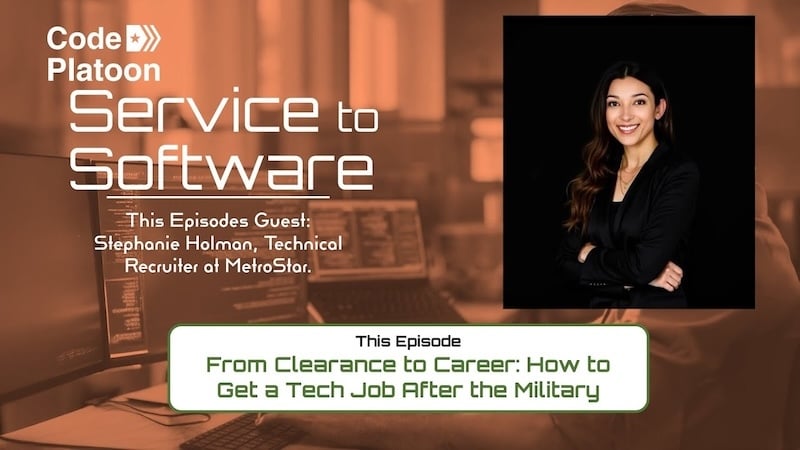


TLDR: Army Reserves Veteran and Technical Recruiter Stephanie Holman helps Veterans turn their military experience into successful tech careers. Her advice? Recruiters are allies, not gatekeepers. From reaching out with confidence to building your LinkedIn and staying persistent, Stephanie’s insights show that every Veteran has what it takes to get a rewarding career in tech.
For many Veterans, stepping out of the military means stepping into the unknown. You've built discipline, leadership, and teamwork, but how do you turn that experience into a job in tech?
That’s the question Stephanie Holman, Army Reserves Veteran and Technical Recruiter at MetroStar, helps Veterans answer every day. She recruits for cleared positions in the Defense, Intelligence, and National Security space, connecting Veterans with technical roles that match their skills. As both a recruiter and a Veteran, Stephanie understands the challenges—and opportunities—of making the leap into civilian tech careers.
How Recruiters Help You Land Your First Tech Job
“There’s a lot of mystery around recruiters. A lot of people don’t know how to talk to us,” Stephanie says. “Recruiters are a time saver for the hiring manager. We talk to you first to make sure you have what the hiring manager is looking for and assess if you will be successful in the position.”
Stephabnie encourages Veterans to treat recruiter screenings as two-way conversations, not just interviews. Ask about work hours, salary range, location, or remote options. And be transparent about your experience.
“Recruiters want to help you find the right fit, and honesty builds trust,” Stephanie says. “The candidates who stand out know what they want and ask thoughtful questions. This is your time to learn about the company and decide if it’s the right fit for you.”
How to Get Noticed by a Tech Recruiter
If you’re wondering whether to message a recruiter on LinkedIn, Stephanie’s advice is simple:
“Always send the message,” she says.
Don’t overthink it, and don’t assume you’re bothering them. Keep your outreach short and personal. Mention what type of role you’re interested in and that you’ve already checked out their company’s openings.
“Your goal is to get to the top of the recruiter’s inbox,” she says. “So make sure you avoid long, generic, or AI-generated messages. They make you blend in, not stand out.”
How to Build a Strong Resume
Before you apply, make sure your resume tells a clear, relevant story. Recruiters and hiring managers often look for keywords that match the job description, so tailor your resume to each role you apply to.
“Highlight your transferable skills from the military. Leadership, problem-solving, and reliability translate directly into tech roles,” Stephanie says.
Stephanie even recommends using tools like ChatGPT to identify gaps between your resume and the position and to target your resume to the job descriptions.
“The technology is at your fingertips. Don’t hesitate to use it,” she says.
How to Optimize Your LinkedIn Profile
Your LinkedIn profile is your first impression online, and recruiters check LinkedIn before scheduling interviews. Keep it current, professional, and aligned with your resume.
Start with the basics:
- Use a clear, professional photo
- Write a headline that reflects your target role
- Update your current job title and responsibilities
- Add a short “About” section highlighting your tech interests or career goals
Avoid oversharing or posting content that could turn off potential employers. As Stephanie explains, “LinkedIn showcases you as a professional. Make sure it reflects the image you want hiring managers to see.”
How to Stay Motivated When the Search Gets Tough
Breaking into tech takes time, and it’s normal to face rejection along the way. Stephanie reminds Veterans that rejection doesn’t mean you failed; sometimes another candidate just reached the finish line first.
“The smartest or best candidate isn’t always who gets the job,” she says. “There can be luck involved.”
The key is persistence. Each conversation builds experience, and each application brings you closer to the right opportunity. Keep networking, refining your resume, and reaching out to recruiters who work in your target field.
Get Our LinkedIn Guide
As Stephanie shares, your LinkedIn profile can be your first impression on future employers. We have a guide that can help you get yours off the ground. Developed by Code Platoon’s Career Services team specifically for the military community, this step-by-step guide shows you how to highlight your skills, experience, and military background. Get the guide to building a better resume.
Ready to Get Started?
Every career journey starts with a single step, and for Veterans entering tech, that step might be reaching out to a recruiter, updating your resume, or polishing your LinkedIn profile.
Stephanie reminds us that confidence grows with each try. So, keep showing up, keep learning, and don’t let the “no”s stop your progress.
If you’re ready to translate your military experience into a technical career, Code Platoon offers supportive training that builds real-world skills for software engineering, AI Cloud, and DevOps roles. Discover how Code Platoon’s programs help military spouses and Veterans build portable, flexible careers in tech.
Want to hear more from Stephanie? Watch her full episode on the Service to Software podcast below.